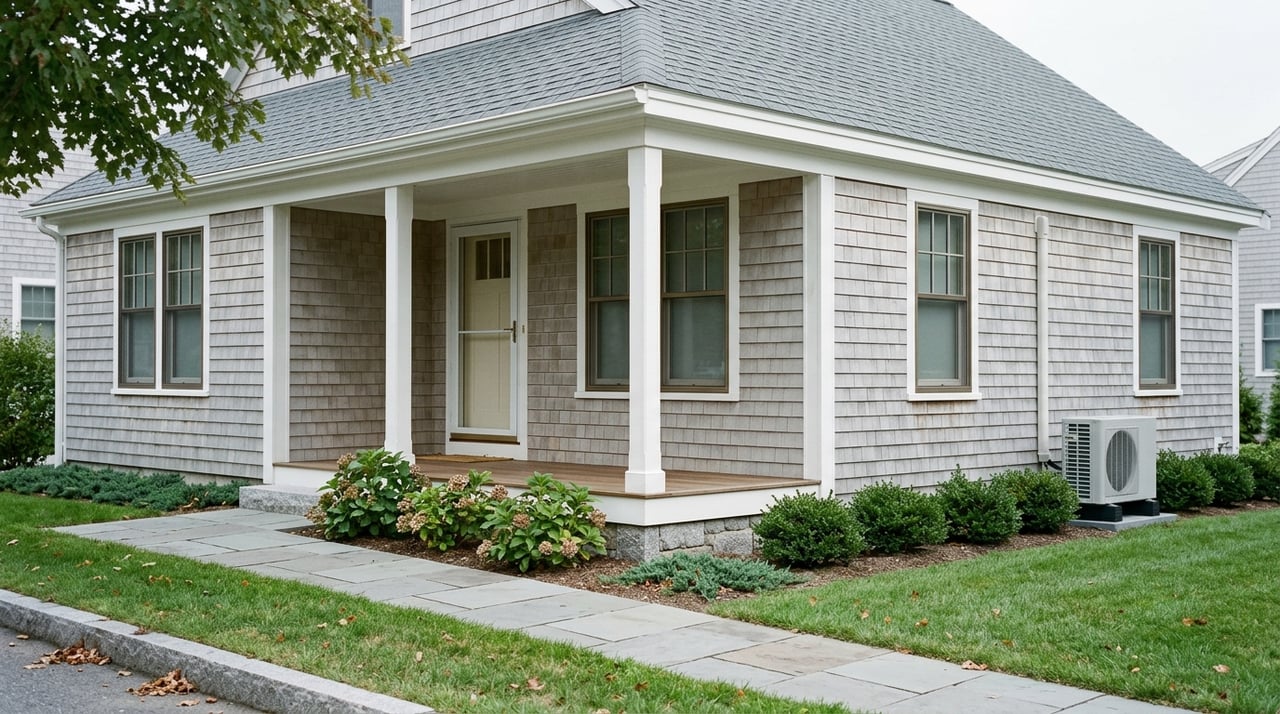
Energy Efficient Upgrades for Older Kennebunkport Homes
July 2, 2026
July 2, 2026
If you own an older home in Kennebunkport, you already know its charm comes with quirks. Drafty rooms, cold floors, window condensation, and uneven heat can make even a beautiful coastal house feel harder to live in through a Maine winter. The good news is that the smartest upgrades usually do not start with tearing out character. They start with understanding how your home loses heat, manages moisture, and responds to a cold, wet coastal climate. Let’s dive in.
Kennebunkport’s climate puts steady pressure on older houses. Local NOAA normals show a mean annual temperature of 45.3°F, about 52 inches of annual precipitation, and nearly 49 inches of annual snowfall. In practical terms, that means comfort issues often come from air leakage, heat loss, condensation, and moisture buildup.
That matters even more in a town with a large stock of preservation-sensitive homes. The Kennebunkport Historic District includes more than 175 historic structures, with many dating to the early nineteenth century. In houses with original wood windows, clapboards, shingles, and trim, visible exterior changes can affect both performance and architectural character.
For many coastal owners, the goal is not just lower utility costs. It is better comfort, stronger durability, and a more thoughtful stewardship approach that respects the home’s age and setting. That is why the right sequence matters.
Before you choose new windows, insulation, or heating equipment, start with a home energy audit. Efficiency Maine notes that energy advisors may use blower doors, combustion-safety testing, and thermal cameras to identify air leaks, missing insulation, moisture concerns, mold risks, and other hidden issues.
This step helps you avoid guessing. In an older home, the problem you feel in the living room may actually begin in the attic, basement, or rim joist. A good audit gives you a clearer roadmap so you can prioritize improvements that solve root causes instead of cosmetic symptoms.
For most older Kennebunkport homes, air sealing is the highest-value first upgrade. Guidance for historic homes from the U.S. Department of Energy describes air sealing as one of the least expensive and most effective retrofit measures, with potential whole-house savings of about 10% to 20% or more in older leaky homes.
The most important leak points are often hidden from view. Common targets include:
This work can make a home feel less drafty and more even in temperature without changing what makes it special. It can also help reduce ice-dam risk, frozen pipes, and moisture problems, all of which are especially relevant in Maine.
Once air leaks are sealed, the attic is usually the next best place to focus. It is often the easiest area to upgrade and one of the most important for reducing heat loss. The Maine code compliance guide based on the 2021 IECC shows a prescriptive minimum of R-60 insulation in ceilings with attics.
Just as important, attic insulation works best when it follows air sealing. If you insulate first and leave leakage pathways open, warm indoor air can still move into the attic, carrying moisture with it. Attic access points should also be insulated and air sealed so the improvement works as a system.
In older coastal homes, the lower parts of the house often tell the real story. Basements, crawlspaces, and band joists are common sources of drafts, dampness, and energy loss. They are also areas where durability matters, especially as coastal communities face flood exposure, storm surge, and moisture stress.
The Department of Energy notes that basement wall insulation is often preferable to insulating the basement ceiling. In crawlspaces, sealing and insulating the foundation walls is often a better strategy than insulating the floor above. That approach can support both comfort and moisture control when done correctly.
If your home has signs of humidity, musty smells, or water intrusion, these lower assemblies deserve close attention. Energy improvements should support long-term durability, not just seasonal comfort.
Wall insulation can be valuable, but it is usually not the first move in an older home. If siding is already being replaced, that can be the right time to evaluate exterior wall insulation or dense-pack solutions for closed wall cavities.
This is where a condition-based approach matters most. Some homes are good candidates for deeper wall work, while others benefit more from targeted air sealing, attic upgrades, and foundation improvements first. In a preservation-sensitive setting, the right answer depends on the home’s materials, details, and renovation scope.
Many owners assume windows should be first on the list. In older Kennebunkport homes, that is often not the case. If original windows are in sound condition, repair, weatherstripping, and storm windows are often more cost-effective and more preservation-friendly than full replacement.
National Park Service guidance for historic properties supports repairing historic features whenever possible. The Department of Energy also notes that when existing windows are in good condition, improving their efficiency may be the better value.
For many older homes, low-e storm windows offer one of the smartest balance points between comfort, efficiency, and preservation. DOE guidance says low-e interior or exterior storm windows can reduce heating and cooling costs by roughly 10% to 30%, depending on the existing window.
That can be especially appealing in Kennebunkport, where original sash, muntin patterns, and glass appearance often play a major role in a home’s character. Low-e storms can improve performance while allowing historic windows to remain part of the home’s story.
Sometimes replacement is necessary because the existing unit is beyond practical repair. When that happens, performance and appearance both matter. Window selection should fit the climate, and proper installation is critical.
In a historic-district context, details such as sash depth, proportions, muntin pattern, color, and overall visual profile can be just as important as the glass package. Exterior window work is not only an energy decision. It is also a stewardship decision.
Once the home is tighter and better insulated, you can make smarter heating choices. This sequence matters because reducing the heating load can allow for smaller, quieter, and more comfortable equipment.
Efficiency Maine’s heat pump rebate rules reinforce that point by tying sizing requirements to the home’s peak heating load. In simple terms, a house that wastes less heat can often be served more effectively by the system you choose next.
Cold-climate heat pumps are now a practical option for many Maine homes, including older ones. Efficiency Maine notes that they provide heating, cooling, dehumidification, air filtration, and indoor air circulation. The program also reports that more than 100,000 heat pumps have been installed statewide.
For owners of older Kennebunkport homes, that makes heat pumps a realistic option once envelope improvements are in place. The key is proper sizing and a whole-house plan, not simply adding equipment to a drafty structure and hoping for the best.
For larger properties or major renovations, geothermal can also enter the conversation. It is more specialized, but it may suit estate-scale homes where the lot, budget, and project scope support a deeper retrofit.
A tighter home should also be a healthier home. When you reduce air leakage, you need to think about ventilation, indoor moisture, and combustion safety at the same time. This is especially important in homes with boilers, furnaces, fireplaces, or other combustion appliances.
That is one reason the audit stage is so important. Combustion-safety testing and moisture evaluation help make sure improvements support comfort without creating new indoor air or condensation problems.
For many homeowners, timing comes down to budget. Efficiency Maine currently advertises rebates up to $8,000 for insulation and air sealing, up to $9,000 for heat pumps depending on income, and up to $3,000 for qualifying geothermal systems. Home energy loans may also be available for eligible upgrades.
The key is not to chase incentives out of order. The strongest results usually come from a repair-first, envelope-first strategy: audit, air seal, insulate, manage moisture, and then size the heating system around the improved home.
Before exterior work begins, confirm the local approval path. Maine’s Department of Energy Resources says the statewide framework is MUBEC, with the 2021 IECC in effect, but enforcement can vary by municipality. Since towns with fewer than 4,000 residents may choose whether to enforce it, homeowners in Kennebunkport should verify local requirements directly before starting work.
If your property falls within a historic-district context, review considerations may also apply. That is especially important for windows, siding, trim, and other visible exterior changes.
In a market like Kennebunkport, energy improvements are not only about monthly operating costs. They can also shape buyer confidence, long-term maintenance, and how a property presents when it is time to sell. Thoughtful upgrades that improve comfort while respecting architectural character tend to tell a stronger story than rushed replacements.
That is particularly true for coastal homes where stewardship, durability, and provenance matter. When you understand how the house works, you can make choices that support both everyday living and long-term value.
If you are weighing updates to an older Kennebunkport property, whether for your own use or ahead of a future sale, Marika Clark brings local market knowledge, renovation fluency, and a practical eye for how stewardship decisions can affect value.
Marika Alexis Clark brings unmatched insight, care, and dedication to every home journey. Whether buying, selling, or simply exploring possibilities, her integrity and passion ensure you feel confident every step of the way.