Love classic New England architecture? In Kennebunkport, you can read a home’s story in its rooflines, eaves, and shingles. Whether you are hunting for a second home or planning a thoughtful renovation, knowing the hallmark styles helps you buy and care with confidence. This guide shows you how to spot the major local styles, how the coast affects materials, and which updates protect both character and value. Let’s dive in.
Spotting Kennebunkport’s classic styles
Shingle Style
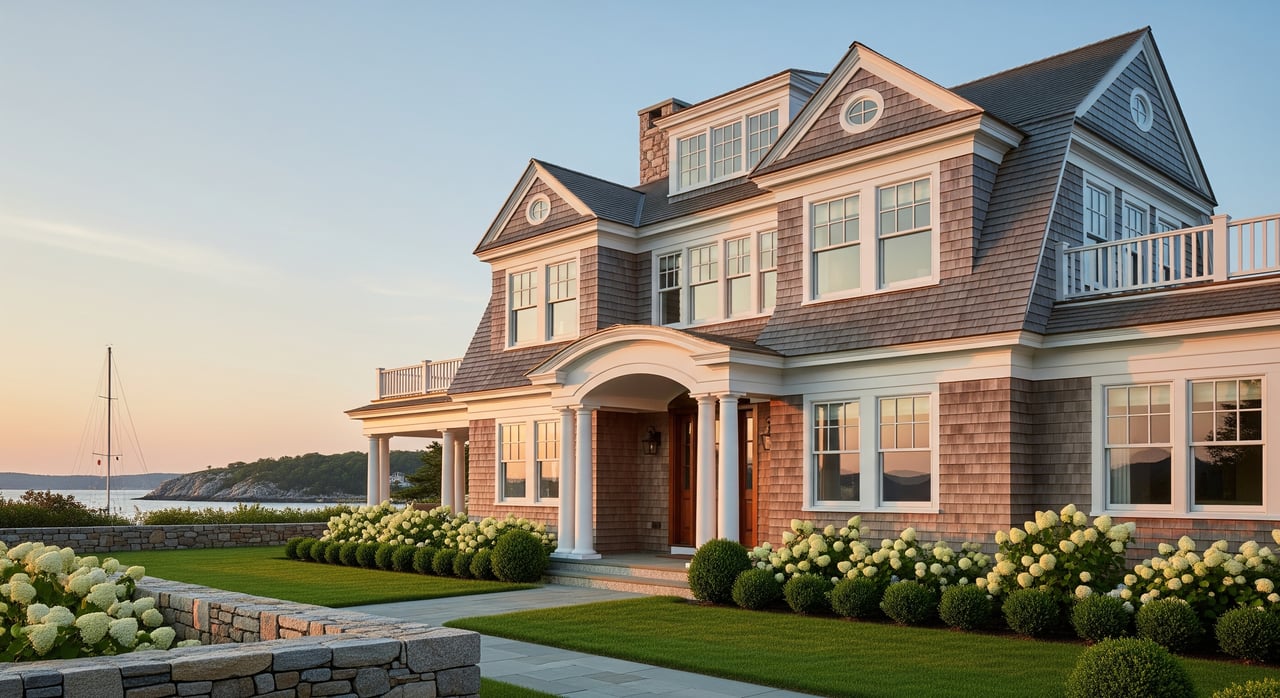
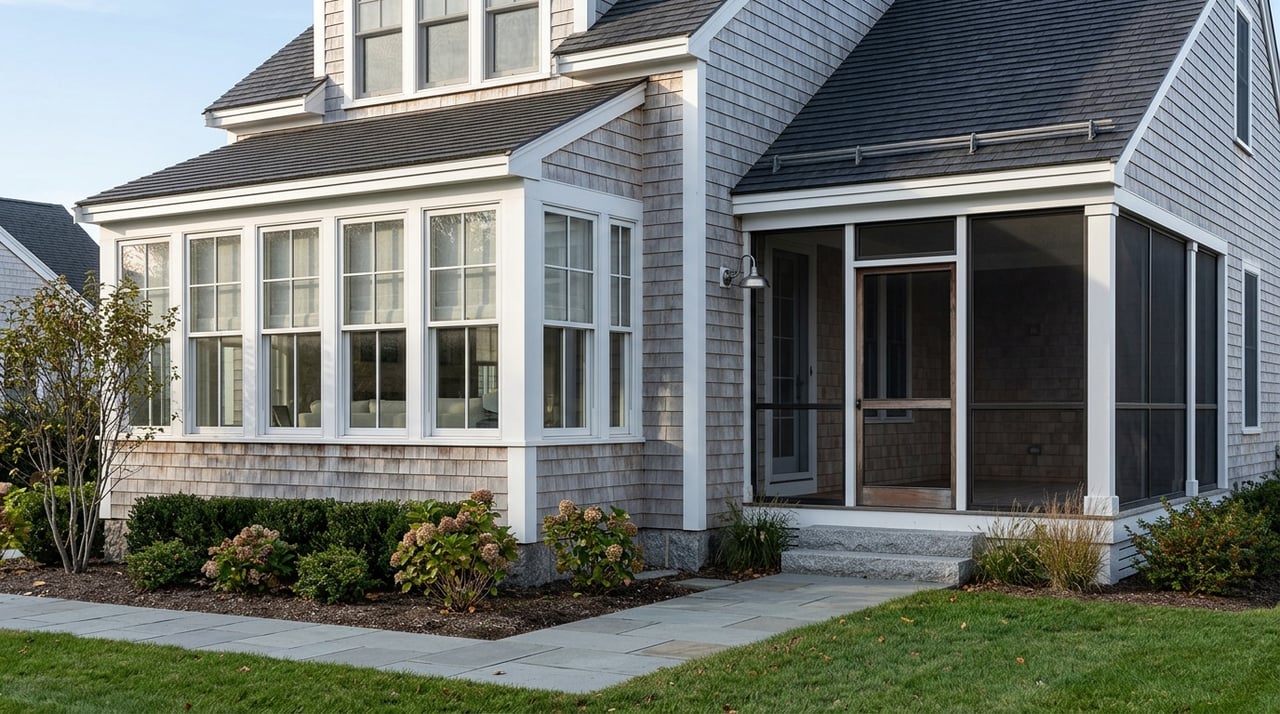
Shingle Style homes are icons of Maine’s resort era. You will notice complex, asymmetrical forms unified by continuous wood shingles.
- Exterior cues:
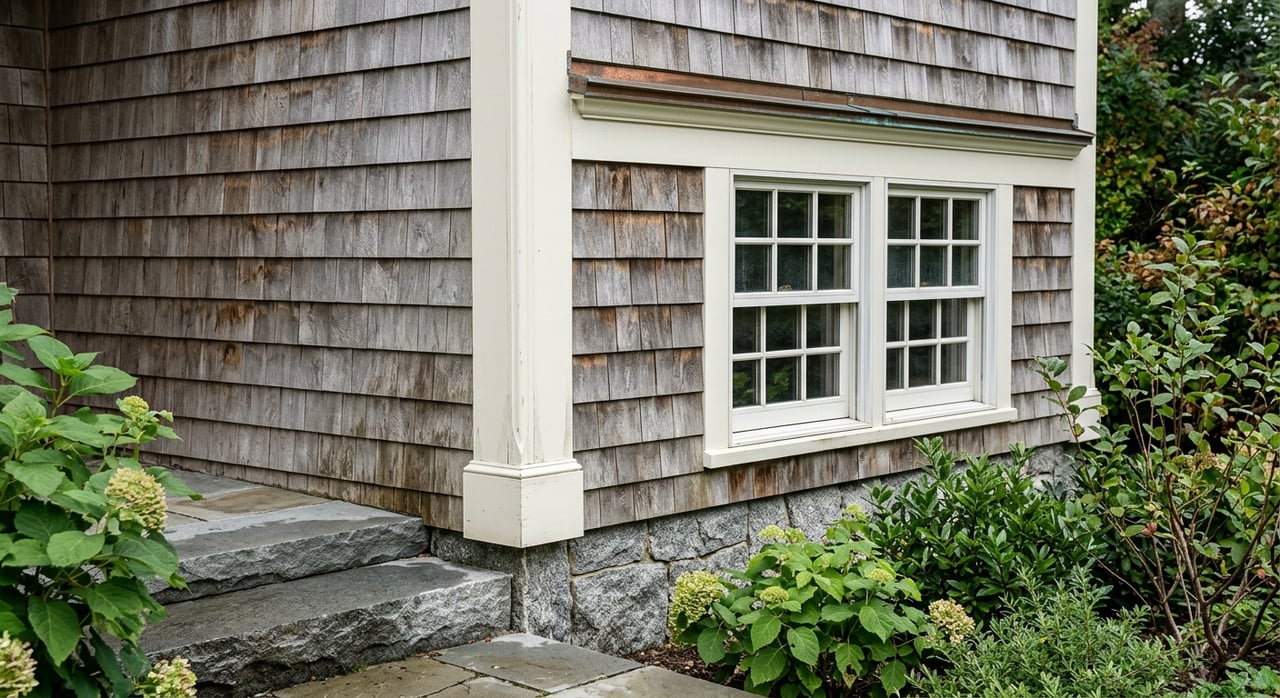
- Continuous cedar shingle cladding that wraps walls and often roofs, with minimal corner boards.
- Asymmetrical massing with gambrel or hipped roofs, wide porches, and recessed entries.
- Grouped or Palladian windows and eyebrow dormers.
- Typical materials:
- Wood shingles on walls and roof, wood framing, painted wood trim if present, and stone or granite foundations.
- Stewardship notes:
- Shingles age differently on walls and roofs. Careful detailing and flashing at eaves, rakes, chimneys, porches, and intersections prevents water intrusion.
- Favor in-kind replacement of damaged shingles and use corrosion-resistant flashing.
Cape (Cape Cod)
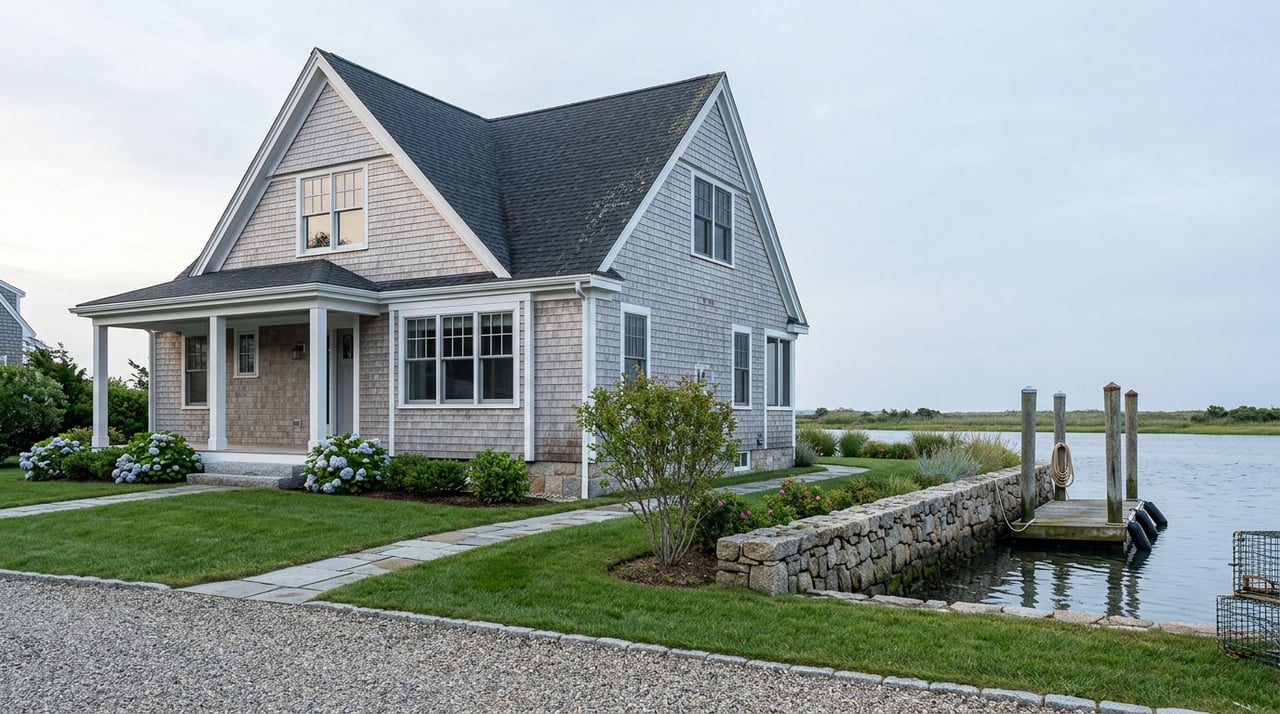
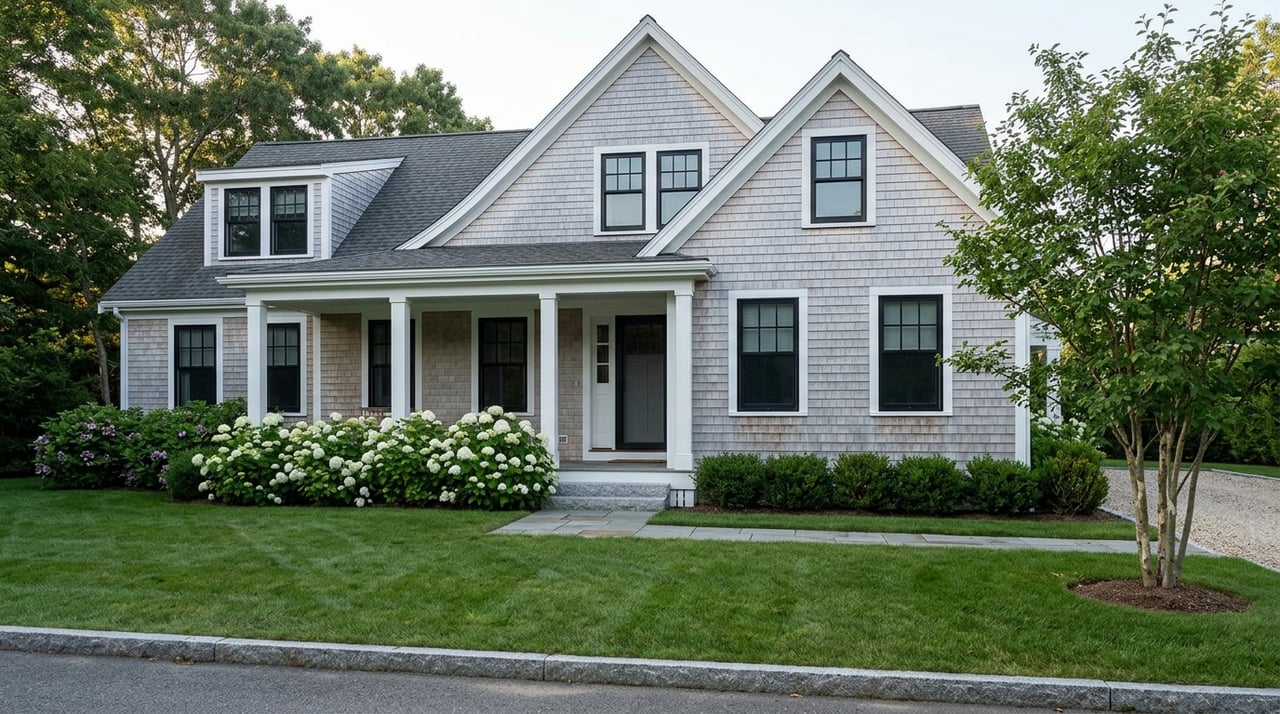
The Cape is the classic, compact New England house type adapted for cold, windy conditions.
- Exterior cues:
- A symmetrical front with a central door flanked by windows on a 1 to 1½ story plan.
- Steep gable roof and small overhangs, often with a central chimney in older examples.
- Dormers are common later additions to gain space.
- Typical materials:
- Clapboard or wood shingle siding, double-hung wood windows, brick or wood chimneys, and fieldstone or granite foundations.
- Stewardship notes:
- Simple eaves make roof-to-wall junctions easier to inspect and repair.
- If dormers were added, confirm structural tie-ins, insulation, and flashing were done correctly.
Federal
Federal-era homes reflect refined classical symmetry from the post-Revolutionary period.
- Exterior cues:
- Boxy, balanced façades with center entries that often have fanlights or sidelights.
- Low-pitched gable or hipped roofs, thin cornices, and slender, taller windows.
- Typical materials:
- Clapboards or flushboard siding, narrow-muntin wood windows, and detailed wood or carved stone entry surrounds.
- Stewardship notes:
- Entrances and delicate trim are character-defining. Prioritize repair and retention over replacement when possible.
Greek Revival
Greek Revival homes bring bold classical forms that symbolized civic pride and prosperity.
- Exterior cues:
- Gable-front or pedimented façades that read like a temple front on some examples.
- Wide frieze bands, bold cornice returns, pilasters at corners, and transom windows.
- Typical materials:
- Clapboards or wide boards with wood trim shaped in classical profiles.
- Stewardship notes:
- Large cornice returns and frieze boards see heavy weather. Inspect for rot, insect damage, and failed paint on a regular schedule.
Updated farmhouses
Vernacular farmhouses have flexible forms and often blend traditional and modern elements.
- Exterior cues:
- Side-gable massing, 1½ to 2 stories, and added porches.
- Mix of clapboard or board-and-batten siding, sometimes with modern windows or metal roofs.
- Typical materials:
- Historic wood cladding with modern upgrades such as composite decking, improved flashing, and storm-rated windows.
- Stewardship notes:
- Interiors are usually easier to modernize. Outside, keep porch proportions, cornices, and eave details to preserve streetscape character.
Coastal climate: what it means for your home
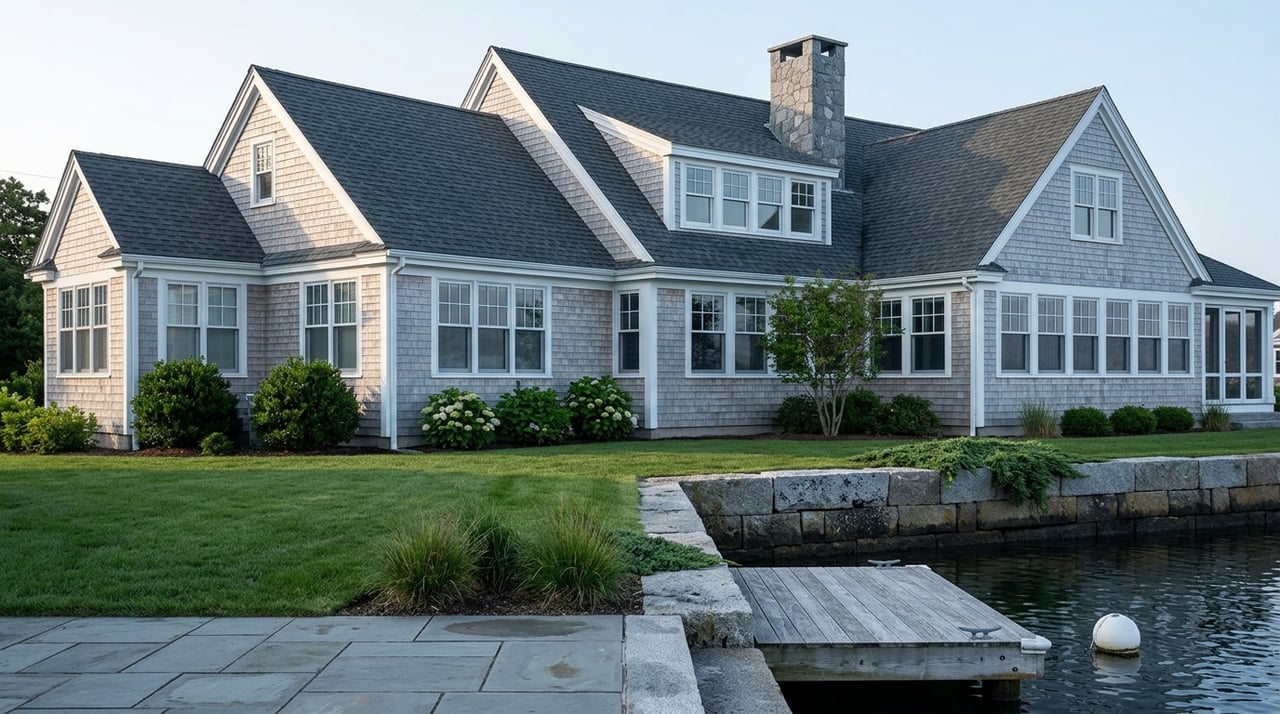
Kennebunkport’s coastal setting brings beauty and exposure. Cold winters, freeze-thaw cycles, salt-laden winds, and year-round precipitation challenge exterior materials. Sea level rise and stronger storms increase baseline flood risk on low-lying parcels. Salt and sun also accelerate wear on finishes and hardware.
Where problems show up
- Wood shingles and clapboards:
- Moisture, salt, and UV can cause cupping, splitting, biological growth, and rot. Wind can lift or tear shingles.
- Metal components:
- Flashing, fasteners, and gutters corrode faster without stainless or hot-dip galvanized protection.
- Windows and doors:
- Exposed sills, sash edges, and thresholds are prone to rot and air leakage. Salt can seize hardware.
- Foundations and masonry:
- Granite and fieldstone foundations can see mortar deterioration from moisture and freeze-thaw.
- Roofing:
- Wood shingles look appropriate but need stewardship. Asphalt shingles can have shorter life in salty, windy exposures. Properly detailed metal roofs are durable.
Renovation that respects character
The most resilient upgrades start with preservation. Identify the features that define your home’s style and protect them first.
- Core principles:
- Preserve character-defining elements such as siding profiles, porches, window proportions, cornices, and entry surrounds.
- Repair in kind whenever feasible. If replacement is needed, match visible material, profile, and dimensions.
- Favor reversible improvements so future owners can adapt without losing historic fabric.
Energy upgrades that work with old walls
- Start with air sealing at the attic floor and basement or crawlspace before tackling walls.
- Use vapor-permeable insulation strategies so assemblies can dry to the exterior.
- Interior wall insulation is possible but requires careful detailing to avoid trapped moisture.
Windows: comfort without compromise
- Restore, reglaze, and weatherstrip original sashes, then add interior or exterior storm windows for an efficient, reversible upgrade.
- If replacement is unavoidable, match the muntin pattern, proportions, and operation of the originals.
Roofs and porches: keep water out and character in
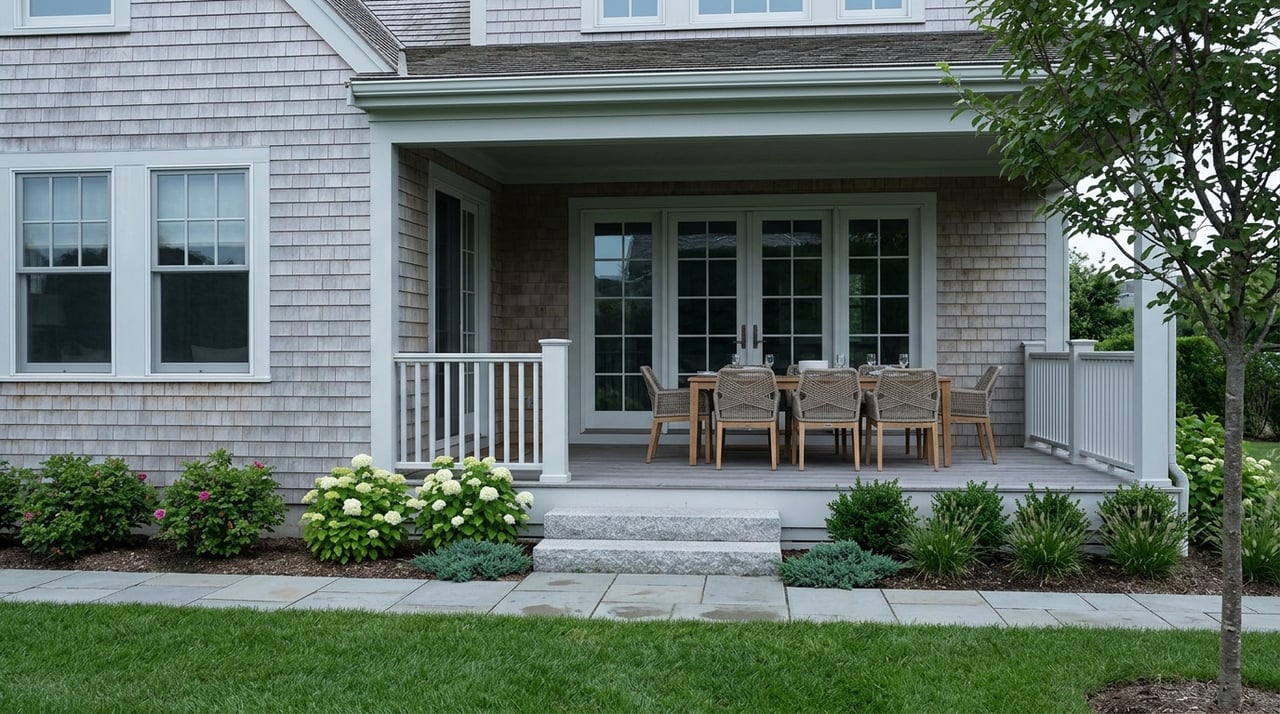
- Retain historic porch columns, railings, and decking profiles. Replace damaged pieces to match or use visually compatible alternatives where appropriate.
- Use corrosion-resistant flashing such as stainless or properly finished copper and confirm correct roof-to-wall transitions.
Foundations and flood risk
- In mapped flood zones, elevate mechanicals and utilities above expected flood elevations and use flood-resistant materials in basements.
- Elevating an entire house is a major decision with structural and aesthetic implications. Engage preservation and structural experts early.
Materials and fasteners for the coast
- Specify stainless steel or hot-dip galvanized fasteners and corrosion-resistant flashings in coastal exposure.
- Use high-quality paints with thorough surface prep. Timely repainting can prevent costly repairs.
Maintenance cadence you can rely on
Proactive care protects both beauty and value. Use this rhythm and adjust for exposure and prior maintenance.
- Annual:
- Walk the perimeter after storms. Check flashing at chimneys, roof edges, porches, and wall transitions. Clear gutters and confirm positive drainage.
- Inspect foundation mortar and grading to divert water away from the house.
- Every 3 to 5 years:
- Touch up trim paint. Service storm windows and lubricate hardware. Check metal components for early corrosion.
- Every 7 to 15 years:
- Repaint or re-stain larger surfaces based on exposure and previous coatings.
- Replace individual shingles or clapboards as needed and check sills and porch decking for rot.
- Every 15 to 30+ years:
- Plan for roofing cycles. Asphalt often lasts 15 to 25 years in exposed sites, wood shingles 20 to 40 years, and metal roofs 40+ years with proper detailing.
- Ongoing:
- After heavy weather, monitor for leaks and water intrusion. Keep downspouts extended and site drainage tuned.
Buyer checklist for showings and inspections
As you tour or inspect, focus on style, systems, and stewardship. Ask targeted questions to understand risk, cost, and potential.
- Which features are truly character-defining, and are they original or accurate reproductions?
- What is the current condition of siding and roofing? Any signs of rot, delamination, lifted shingles, or failed flashing?
- Are there historic district or review requirements that affect exterior changes?
- Is the property within a mapped flood zone or coastal overlay? Where are the mechanicals located relative to expected flood elevations?
- Do records or permits document past renovations, especially dormers, window replacements, and porch work?
- What is the condition of the foundation and on-site drainage? Any evidence of ponding or water against the walls?
Balancing authenticity, comfort, and cost
You will often weigh in-kind repairs against modern materials. Traditionalists value historic wood for authenticity and repairability, while some owners prefer modern products for lower maintenance. Consider durability, visual match, and the impact on historic fabric before deciding.
Energy upgrades bring another tradeoff. Insulation and modern windows can improve comfort, but the safest path is usually incremental and reversible. Start with attics and basements, add storms and weatherstripping, and only then consider interventions that affect exterior character.
In coastal settings, cheaper short-term fixes can lead to higher long-term costs. The right materials, fasteners, and flashing reduce maintenance cycles and protect value, especially on the ocean-facing side of a home.
Let a local expert help you decide
If you want to buy or steward a Shingle Style retreat, a tidy Cape, or a bold Greek Revival, the right plan protects both character and comfort. With deep local knowledge and renovation fluency, you can identify what to preserve, what to upgrade, and how the coast will influence your budget and timeline. For tailored guidance on style, maintenance, and valuation, connect with Marika Clark for a private consultation.
FAQs
What defines Shingle Style homes in Kennebunkport?
- Continuous wood shingles unify asymmetrical forms with gambrel or hipped roofs, wide porches, and grouped windows, often with minimal corner boards.
How does coastal climate affect wood shingles and clapboards?
- Salt, wind, moisture, and UV cause cupping, splitting, and rot, so ventilation, quality finishes, and timely in-kind repairs are key.
What should I consider before adding dormers to a Cape?
- Confirm structural tie-ins, flashing details, and insulation strategies to prevent leaks and moisture issues at the new roof-wall junctions.
Are Greek Revival cornices and frieze boards vulnerable?
- Yes, bold cornice returns and wide frieze bands take heavy weather and often need careful inspection, paint maintenance, and targeted repairs.
How often should I repaint exterior trim near the ocean?
- Plan for touch-ups every 3 to 5 years and full repainting on a 7 to 15 year cycle, adjusted for exposure and prior coatings.
How can I improve efficiency without replacing historic windows?
- Repair and weatherstrip original sashes and add interior or exterior storm windows for a reversible, cost-effective upgrade.
Which materials and fasteners hold up best in salt air?
- Stainless steel or hot-dip galvanized fasteners and corrosion-resistant flashing provide longer life for roofs, porches, and trim.
What should I know about flood risk and foundations?
- In mapped flood zones, elevate mechanicals, choose flood-resistant materials in basements, and plan drainage to move water away from foundations.